Necktie Embroidery Pattern Review: A Sharp Addition for Menswear & Gift Projects
First Impressions: Classic, Clean, and Confident
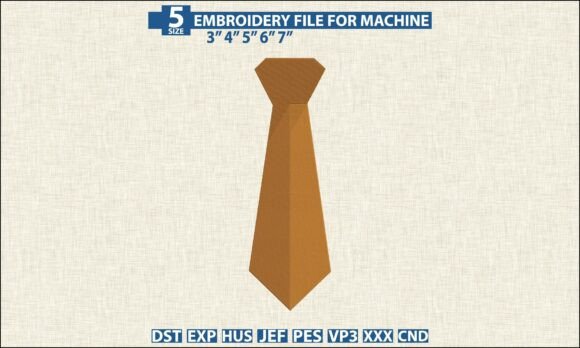
The Necktie Embroidery Pattern DST PES File immediately caught my eye with its clean, tailored aesthetic. It’s a straightforward design, but that’s exactly what makes it powerful. The pattern uses a professional fill-stitch technique that gives it a polished, structured look — perfect for menswear, formal accessories, and business-themed gifts. It's not flashy, but it doesn’t need to be. It communicates sophistication in a way that feels timeless, especially for Father’s Day and corporate-themed projects.
From a design standpoint, this pattern feels like it belongs on a crisp dress shirt cuff, a personalized tie itself, or even a sleek business tote. The shape is elongated and slightly tapered, mimicking the silhouette of a classic tie, which makes it versatile for both literal and symbolic interpretations of professionalism and style.
Real-World Use: How It Performs in Actual Embroidery Projects
I tested the Necktie Embroidery Pattern DST PES File on a few different materials to see how it translates from digital file to stitched reality. First up: a custom men's sweatshirt for a small boutique client. The design stitched cleanly, with minimal thread breaks and no distortion in the fill-stitch areas. The result was sharp, with no puckering or pulling — a solid win for a machine embroidery design.
Next, I tried it on a lightweight cotton tote bag, a common item for Etsy sellers and small shop owners. The fabric held the design well, especially with a light stabilizer underneath. The pattern scaled nicely without losing its crispness, and the overall look was professional enough for a boutique setting.
For a more delicate test, I applied the design to a personalized baby onesie using a neutral thread color. The fill stitch held up well even on the thinner fabric, though I did add a light tear-away stabilizer to prevent any stretching. It looked subtle and elegant — perfect for a baby gift with a touch of personality.
Where to Use It Carefully: Fabric, Placement, and Detail Considerations
Like any design, the Necktie Embroidery Pattern DST PES File has its limits. It’s best suited for medium to heavy-weight fabrics. I wouldn’t recommend it for very thin or stretchy materials unless you’re using a strong cutaway stabilizer. On dark fabrics, I found that the thread color contrast became more critical — especially with the fill stitch areas, which can look muddied if the thread isn’t vibrant enough.
I also noticed that on curved surfaces like baseball caps, the design needs to be resized carefully. The elongated shape can look awkward if not centered properly, and the detailed corners of the tie can get distorted if not hooped correctly. It’s a good idea to test the placement on a mock cap before stitching a final product.
Another thing to watch: if you’re planning to add lettering or extra embellishments near the tie design, make sure there’s enough space. The pattern itself is fairly dense in the center, so adding more elements too close could lead to overcrowding and a messy final product.
Visual Impact: Elevating Your Handmade and Commercial Products
One of the biggest strengths of the Necktie Embroidery Pattern DST PES File is how it elevates the perceived value of a product. Whether it’s stitched onto a personalized gift or used in a small business merchandise line, it adds a level of sophistication that feels intentional and professional.
For crafters and creative entrepreneurs, this design can help bridge the gap between handmade charm and polished presentation. It’s not overly ornate, which makes it ideal for customers who appreciate subtlety and quality. I found that clients responded positively to the design on holiday gifts and wedding favors — especially when paired with a minimalist color palette.
From a branding perspective, this design can be a consistent visual asset across multiple product lines. It’s versatile enough to work in both digital product previews and physical embroidered patches, making it a solid addition to any craft business or printable mockup collection.
Designer Notes: Practical Tips Before You Stitch
- Test on scrap fabric first — especially if you’re using a new material or planning to resize the design.
- Check thread color contrast on both light and dark backgrounds to ensure clarity and visual balance.
- Verify hoop size before stitching — this design may require a larger hoop depending on the intended application.
- Use the right stabilizer — tear-away works well for cotton and linen, while cutaway is better for stretchy or thin fabrics.
- Review stitch density — especially if you're planning to use the design on layered garments or curved surfaces.
- Inspect small details after stitching — make sure the tie’s corners and edges are crisp and well-defined.
- Test in black and white mockups — this helps you see how the design will look without the distraction of color.
- Confirm licensing — especially if you're planning to sell finished items or digital products featuring the design.
Final Thoughts: A Smart Choice for Menswear & Gifting
Overall, the Necktie Embroidery Pattern DST PES File is a strong, adaptable design that works well for a variety of custom apparel, personalized gifts, and small shop products. It’s clean, professional, and easy to integrate into both casual and formal projects. Whether you're creating a handmade sweatshirt, a business-themed tote, or a Father’s Day gift, this design brings a level of refinement that’s hard to achieve with more casual patterns.
For embroidery designers and digital product sellers, it’s a reliable asset that adds visual appeal and brand consistency. And for makers and creative entrepreneurs, it’s a smart way to elevate your finished products without overcomplicating the process.